fbpx
Providing Vibration Solutions to the U.S., Canada and Latin America
Free Engineering & Application Assistance

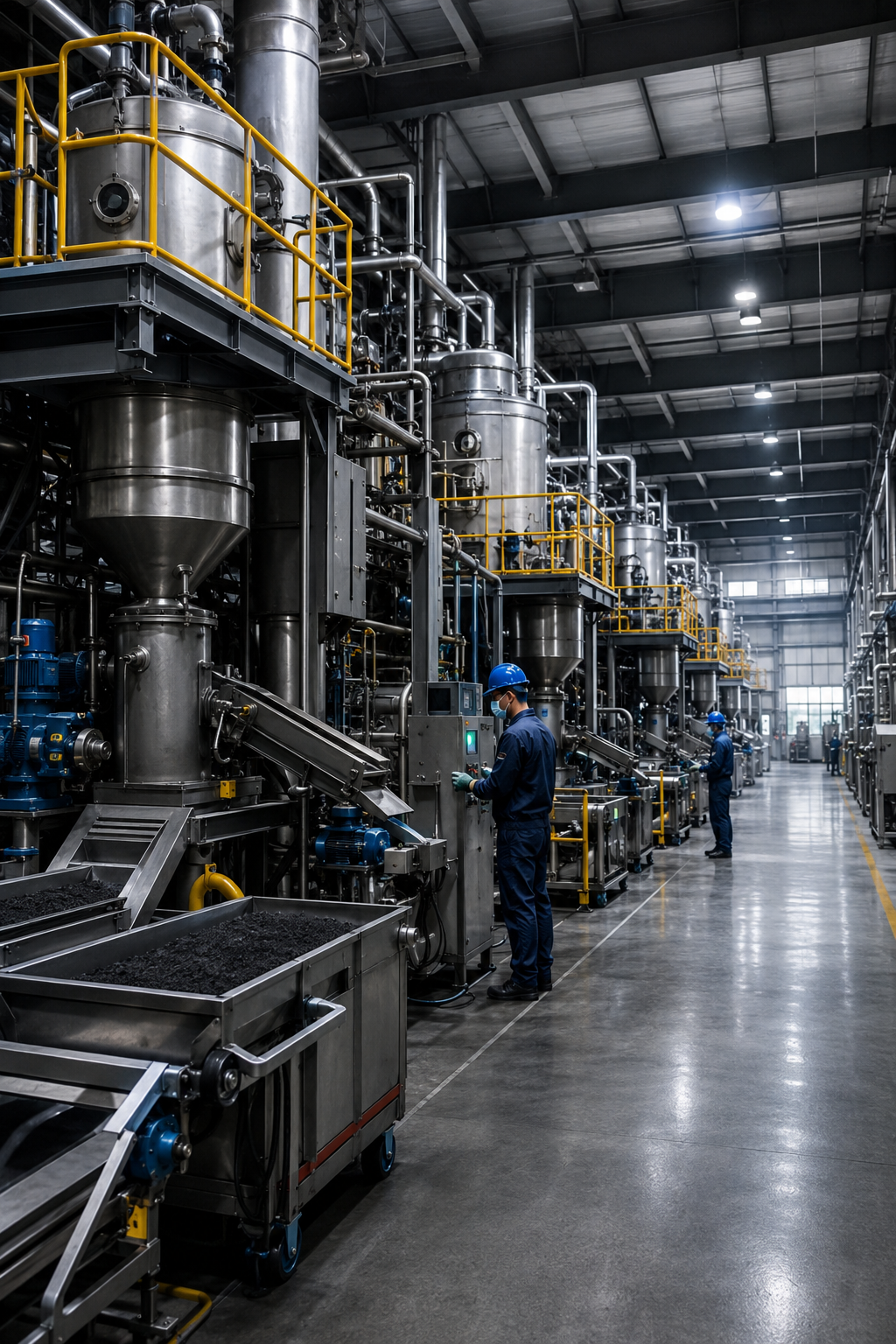
Battery Materials & Energy Storage Manufacturing

Material Flow Solutions for Battery Manufacturing

Keep lithium, graphite, black mass, cathode and anode materials flowing reliably through hoppers, feeders, bins, silos and processing equipment.

The energy storage revolution runs on powder. Behind every lithium iron phosphate battery cell — whether it’s powering an electric vehicle, a grid-scale storage system, or a data center backup array — is a complex chain of bulk materials that must be mined, refined, transported, stored, and precisely fed into production. Every step in that chain depends on reliable powder flow.

Martin Vibration Systems & Solutions has been solving bulk solids handling challenges for decades, and battery materials are among the most demanding powders in any industry.

Battery Powder Handling Challenges

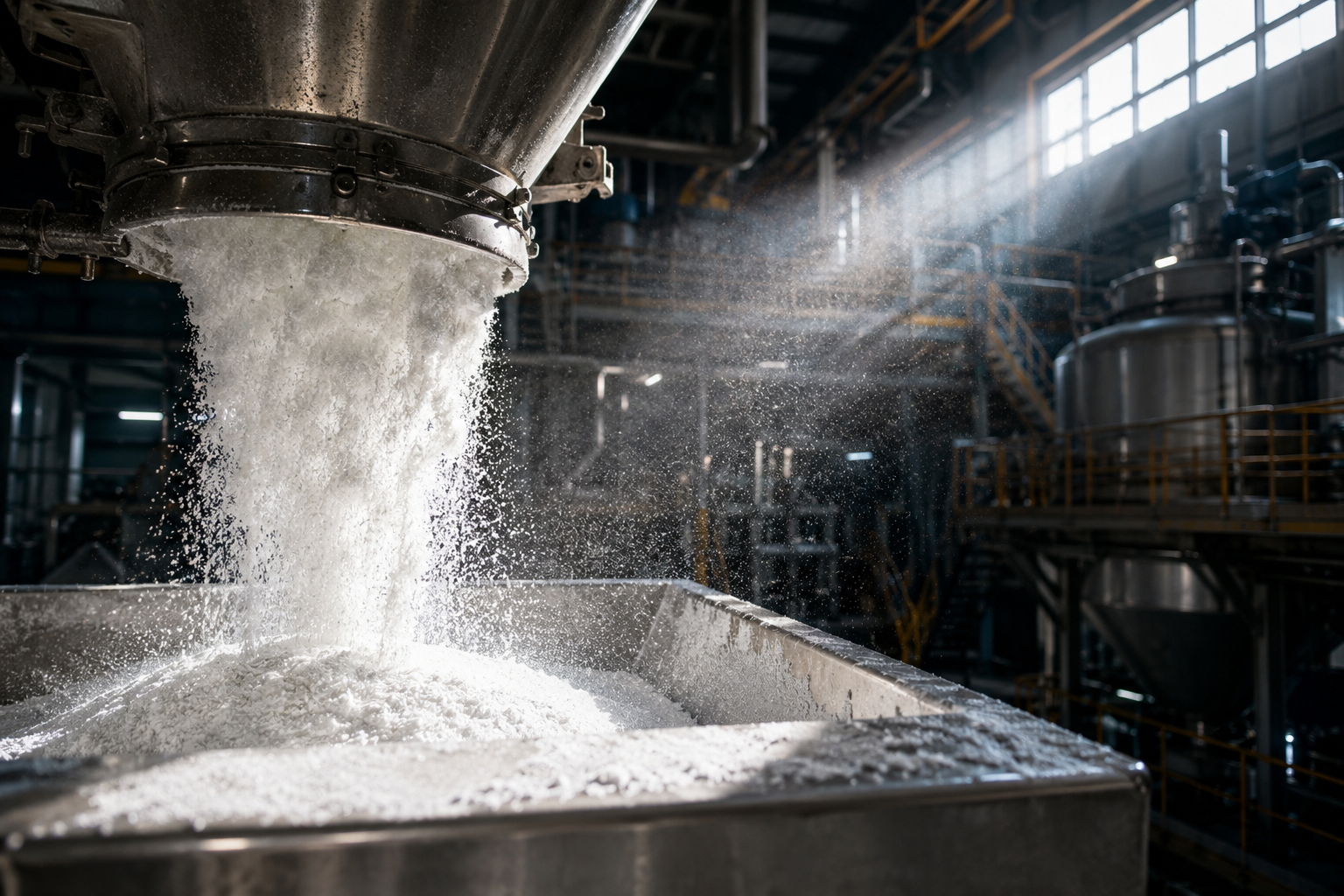
Battery powders are fine, dense, cohesive materials that resist consistent flow at every stage of the supply chain leading to:

  • Bridging and ratholing in silos, bins, and hoppers during storage and discharge
  • Inconsistent feed rates into slurry mixing disrupting battery chemistry and product quality
  • Material buildup and caking during transport and transfer
  • Incomplete discharge from bulk trucks and railcars delivering lithium and graphite materials
  • Dust generation and containment with fine, high-value powders
  • Flow variability in highly automated production environments where downtime is extremely costly
  • Material segregation during transfer affecting downstream process consistency
  • Why Battery Materials Are Difficult to Handle

    Battery-grade powders are engineered for electrochemical performance, not flow. That creates real challenges throughout the supply chain:

    • Lithium carbonate and lithium hydroxide are fine, hygroscopic powders that absorb moisture and change flow behavior based on ambient conditions
    • Iron phosphate is a dense, cohesive material prone to bridging and ratholing under its own weight
    • Graphite is an extremely fine, low-density powder that generates significant dust and resists consistent metering
    • Cathode and anode materials are blended to precise specifications, so segregation during transfer or storage directly affects battery performance
    • Battery-grade materials are high-value, and any loss, contamination, or batch inconsistency carries significant cost
    • Recycled black mass has the most challenging handling profile in the supply chain — fine, cohesive, variable, and highly dusty
    • Battery manufacturing facilities often represent investments of billions of dollars, making downtime far more costly than in most industrial environments
  • Battery Materials Handled

    Our vibration equipment handles the full range of battery supply chain materials:

    • Lithium carbonate
    • Lithium hydroxide
    • Iron phosphate (LFP cathode material)
    • Graphite (anode material)
    • Cathode active materials (CAM)
    • Anode active materials (AAM)
    • Mixed hydroxide precipitate (MHP)
    • Recycled black mass
    • Refined battery-grade material streams from recycling processes
  • Where Our Products Fit in the Supply Chain

    The battery supply chain is long, and powder handling challenges exist at nearly every stage. Our products are applicable from raw material extraction through finished cell production and into recycling:

    Raw Material & Refining Lithium brine and spodumene ore are processed into lithium carbonate and lithium hydroxide at refining facilities. Iron phosphate is produced at chemical plants. These operations involve large-scale silo and hopper systems handling fine, reactive powders that require consistent, reliable discharge.

    Bulk Transport & Receiving Battery materials move by rail and bulk truck across long supply chains. Railcars and hopper trailers delivering lithium and graphite compounds need vibration assistance to fully and consistently offload fine, cohesive materials.

    Storage & Intermediate Handling Materials are stored in silos, bins, and bulk bags at multiple points before reaching the battery plant. Bridging and ratholing in these vessels is common and can halt production if not addressed.

    Battery Cell Manufacturing At the manufacturing stage, cathode and anode powders are precisely metered into slurry mixing systems. Consistent, controlled feed rates are critical. Variability in powder flow translates directly to variability in battery chemistry and cell performance.

    Battery Recycling Spent batteries are processed into black mass — a fine, cohesive, highly dusty powder containing lithium, graphite, and other recoverable materials. Black mass is then refined and re-enters the supply chain as a raw material input. Recycling facilities represent a fast-growing and particularly demanding application for powder handling equipment.

  • Operational Benefits for Battery Material Producers and Manufacturers

    Manufacturers that integrate appropriate and well-placed vibration equipment into their processes find improvements in product quality, production flow, safety, and compliance, including:

    • Consistent discharge from silos, bins, and hoppers eliminating production stoppages
    • More accurate feed rates into slurry mixing supporting better batch-to-batch product consistency
    • Complete offloading from railcars and bulk trucks reducing material loss and turnaround time
    • Reduced manual intervention in highly automated environments
    • Improved dust control with fine, high-value powders
    • Lower risk of material contamination during transfer and storage
    • Reduced downtime in facilities where stoppages carry extreme financial consequences

Products Typically Used In This Application

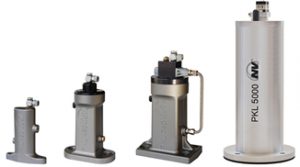
MARTIN® PKL® Interval Impactors

Interval impactors generate individual blows similar to a hammer.

  • Great for spray dryers, pipes and dust collectors
  • Superb controllability
  • Reduces noise, energy costs, and bin damage
  • Available with ATEX certification
Learn More
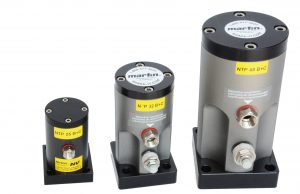
MARTIN® NTP™ Continuous Impacting Linear Vibrators

This continuous impacting linear vibrator delivers high acceleration for removing sticky materials from vessel surfaces.

  • Sanitary coating ideal for food or pharmaceutical applications
  • Comes with cushioning strike plate to reduce stress on vessel walls
Learn More
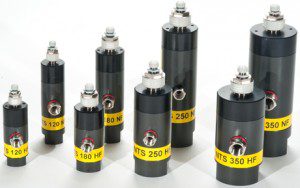
MARTIN® NTS™ 80-350 Non-Impacting Linear Vibrators

This non-impacting vibrator provides powerful linear force for moving materials in small bins and hoppers.

  • Ideal for food, pharmaceutical and chemical applications
  • Quietest, most energy efficient vibrator on the market
  • Available with ATEX certification
Learn More
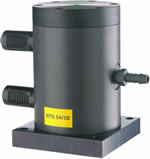
MARTIN® NTS™ Non-Impacting Bin Vibrators

This bin vibrator offers low-frequency, high-amplitude energy best suited for larger particle sizes and light bulk densities.

  • Delivers powerful linear force without impacting
  • Designed for use with bowl feeders
  • Available with ATEX certification
Learn More
MARTIN® VAC-MOUNT™ Portable Vibrators

This mount uses vacuum suction allowing for quick, easy installation and portability.

  • Designed for applications requiring flexibility and portability
  • Can be mounted wherever hangups occur
  • No welding required
Learn More
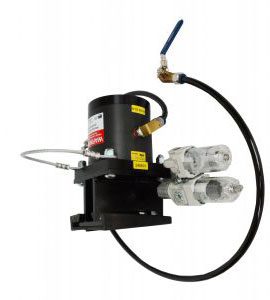
POCKET ROCK-IT™ Railcar Vibrators

This lightweight, high-performance vibrator unloads stubborn materials from closed top hopper cars safely and efficiently.

  • Includes a wedge bracket, hose whip, and regulator for easy setup
  • Weighs < 32 lbs, greatly reducing the risk of back injury
  • Quiet operation reduces noise pollution
Learn More

Why MARTIN®?

We’ve been solving bulk solids flow problems across demanding industries for decades, and we’re already supplying products to companies in the battery manufacturing space.

Our application experts don’t recommend products off a spec sheet. They work with your specific material, vessel geometry, and process requirements to find the right solution. We have products suited to every point in the battery supply chain — from railcar unloading through hopper discharge at the slurry mixer — including options specifically designed for environments where fine powders create combustible dust conditions.

Contact our application experts to discuss your battery material handling challenges. Engineering and application assistance is always free.