 En Español

 Industrial Vibration for Emptying and Unloading Applications
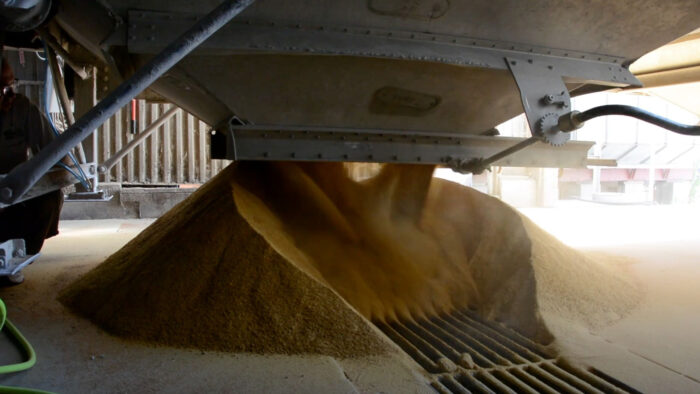
A persistent challenge across many industries is unloading bulk solids or powders with higher-than-normal moisture content from hoppers, bins, train cars, and truck trailers. Moisture occurs naturally in some substances, especially foods, while others pull it hygroscopically from humidity in the air. Either way, higher moisture content causes the material to bind at the particle level, which reduces flow and makes emptying slow and difficult.
Common Challenges
- Bulk solids or powders binding together due to moisture, slowing or stopping flow out of a container
- Bridging and ratholing in hoppers, bins, train cars, and truck trailers
- Residual material sticking to the sides and bottom of a container after emptying
- Workers manually pounding on equipment with a mallet or hammer to move stuck material, risking injury and equipment damage
How Vibratory Emptying and Unloading Works
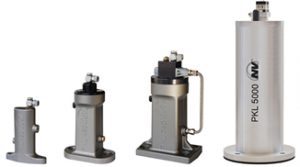
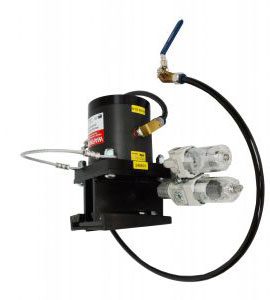
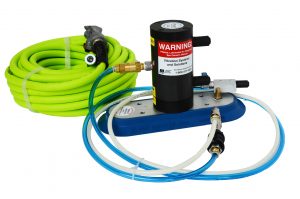
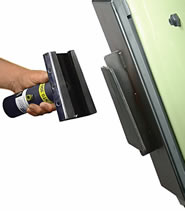
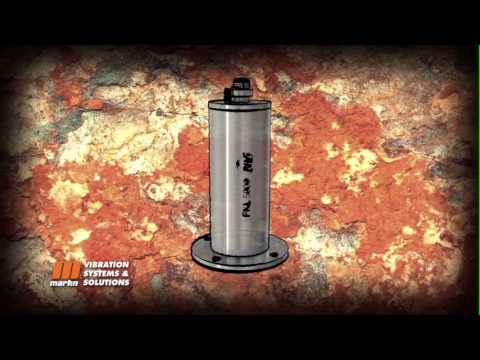
Applying an industrial vibrator to the outside of a hopper, bin, railcar, or trailer breaks up clumps that have bound together, so material flows more smoothly and thoroughly. The vibration also minimizes bridging and ratholing, eliminating the need to manually pound on the equipment to get material moving. Because the vibration is applied externally and the amplitude and frequency are adjustable, portable models can be moved from one piece of equipment to another as needed.
Industries That Rely on Vibratory Emptying and Unloading
- Grain and feed handling
- Food and beverage processing
- Chemical processing
- Construction materials and aggregates
- Any operation unloading railcars, hopper trailers, bins, or hoppers