vibrators

Posts Tagged ‘compaction table’

Announcing: Martin Vibration new line of compaction tables!

Saturday, July 9th, 2011

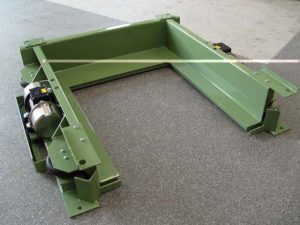
This past year we have designed, built and tested three major size compaction tables. All three compaction table designs are suited for large weight bearing material.

The first one, nearly 4,000 lbs, was built with a chain pulled cart running underneath and a special frame to support such a large load.

Our second design was specially designed for compacting 250 lbs load. It has a minimal height and the smallest lift and diameter air bags were needed.

Our third design, we refer to as the “Grand Daddy” of vibratory tables has three sections tied together to work in unison. The welded construction had to support 3,000 lbs. A special control panel was created operate the vibrators.

At Martin Engineering we can assist you in developing a compaction table to suit your customer’s needs. Please send your request for our technical support people to review and advise the best means to solve a compaction challenge.

Compaction Tables Alive and Well!

Tuesday, May 10th, 2011

The compaction table industry is alive and well at Martin Engineering. This past year there were three major size compaction tables built, tested, and shipped to different parts of the country.

First, the table of great weight, 4,000 lbs load capacity, was required by the Denver Mint. The requirement was to compact blanks in tote bins. No big deal until we reviewed the table requirements, which called for a chain-pulled cart to run under the table, thus, requiring a special frame to support the load. Then the top had to have a special guide to position the tote bin. This configuration upset the natural balance of the table top, which required a special sized air bag to lift and clean the chain-pulled cart and support the load during compaction. Electric vibrators were chosen to move the parts within the tote bins.

The second compaction table was a special in its small size, 24 x 24 square, to compact a 250 lbs. load. The compaction required an NTK55. A minimal height of the table was required; thus, the smallest lift and diameter air bags were used. An air control unit was installed to provide air at the required pressure to operate the vibrator and lift the load for vibration. Mission accomplished. The Unit shipped to our customer and then to the final installation overseas.

The third was the Grand-Daddy of Martin Engineering’s Vibratory Tables to date: three sections tied together to work in unison to compact a special molded part for Boeing Aircraft Company. The top was ground for a special finish. The welded construction had to support loads up to 3,000 lbs with minimum deflection of .0017 per section and have the capability of leveling each section independently. Again a special control panel was designed to operate the vibrators to compact the load within the special mold, which was bolted to the table top. A special passageway through the frameworks had to be provided for maintenance on the motors and weight adjustments for different frequencies of different loads.

At Martin Engineering we can assist you in developing a compaction table to suit your customer’s needs. Please send your request for our technical support people to review and advise the best means to solve a compaction challenge.

What is a Compaction Table?

Tuesday, April 12th, 2011

Compaction tables are used to compact, settle and combine material. The material is then put into a container in preparation for shipping.

Compaction tables are designed and fabricated to suit the specific needs of your application. Your table can be powered by pneumatic or electric vibrators, and a variety of control configurations are available.

Martin Vibration Systems and Solutions designs compaction tables with quality components and materials to provide a reliable piece of equipment that will prove to be successful for many years to come.

Types of Vibrating Tables

Monday, March 7th, 2011

Compaction Tables – Custom designed to meet specific manufacturer needs, these tables can be flat or nested. These tables are versatile and can solve a wide variety of processing problems.  

Flat Deck Tables – These types of tables are well suited for general industry such as compacting materials, removal of entrapped air, consolidating concrete, vibration testing and for food processing and packaging. They can be designed with pneumatic or electric vibrators to meet your specific requirements. 

Nested Tables – These types of tables can be used with single or double conveyor systems.  They are noted for quickly compacting contents like molds, boxes, drums and other containers.

The type of industries that use vibration tables are foundries, concrete, chemical and bulk materials and food processing.

Compaction Tables Help Cut Costs

Saturday, January 8th, 2011

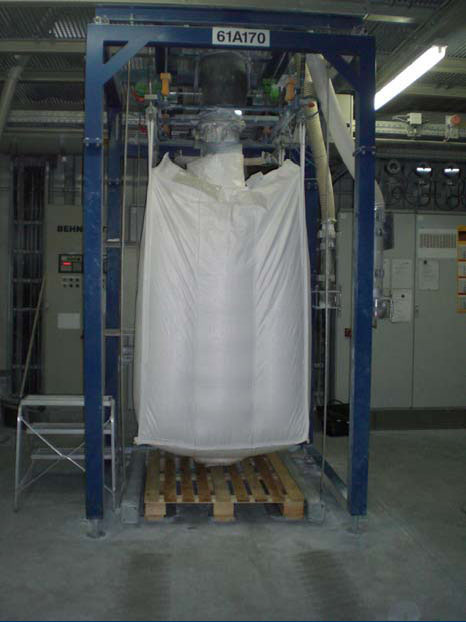
Martin Vibration compaction tables improve production time by quickly settling material.  Vibrating tables allow more material to flow into smaller containers therefore less air in packaging.  They reduce overflow and spillover waste at filling stations.  Use any of our standard tables or we can custom build one for you to fit any production configuration.

What Makes Us The Expert in Industrial Material Handling?

Monday, August 23rd, 2010

Martin Vibration Systems & Solutionsis the original industrial vibrator company and the inventor of the ball vibrator over 50 years ago. Since then we have pioneered the development and application of industrial vibrators. 

Martin has solved thousands of material handling problems in a variety of industries, including Pharmaceutical, Foundry, Bakery, Foods and Chemical.

We have over 3000 industrial vibrator models to suit every material handling need. Our vibrators are available in pneumatic, electric and hydraulic power.  We’re experienced in virtually all industries and have solved thousands of material handling problems.

The use of vibration to enhance the movement and storage of bulk solids has been around since solids were first handled as bulk commodities.

Case Study: North American Vegetable Grower

Thursday, March 4th, 2010

Problem

This large vegetable producer in North America was on a quest to get more vegetables into their Gaylord containers to try to reduce their cold storage cost while they waited to process and package the veggies after the harvest.

Situation

When they approached Martin, their process was to fill containers of various frozen vegetables after the harvest and send these to cold storage until the units are sold in bulk or packaged and sold into stores.  The cold storage facility charges by the square-foot of the container and not by the pound.

Therefore, the goal was to aid in settling these vegetables and pack at least 5% more into each container without requiring an operator to stand and rake the contents, and to also do this without destroying the container, as they hope to reuse each container at least three times prior to discarding.

The company deals with millions of pounds of vegetables annually, using containers that hold 1000-1500 pounds at a time, which translates to 1000s of containers each year.

Solution

Martin suggested using a compaction table, VT 8, to gently vibrate the containers prior to cold storage.  By automatically settling the vegetables, they eliminated the need for an operator with a rake.  In addition to the considerable manpower savings, they avoided damaging the containers during the process and were able to get 5-8% more product into each container, saving a very significant amount on cold storage fees as well.