
 En Español
 En Español
 Free Engineering & Application Assistance
 800-474-4538 (Call)
 810-278-5686 (Text)
Hassle-Free Mounting for Electric Vibrators
MARTIN® Electric Vibrator Mount Kits
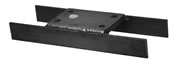 Installing electric vibrators shouldn’t slow down your operation. Our Electric Vibrator Mount Kits are engineered for quick, secure, and reliable installation on bins, hoppers, silos, and chutes. Each weld-on mount ensures your electric vibrators deliver optimal performance and consistent material flow, even in tough environments.
With universal compatibility and rugged construction, these kits make it easy to add, upgrade, or relocate electric vibrators as your needs evolve. Save time, reduce labor costs, and keep your process moving with our Electric Vibrator Mount Kits.
Key Benefits
- Fits most electric vibrators and bin types
- Built for long-lasting durability in demanding applications
Features
- Heavy-duty mounting plates for superior strength
- Pre-drilled holes for easy, accurate alignment
- Durable, corrosion-resistant finish for long-lasting performance
What’s Included
- Electric Vibrator Mount Kit
- 30-day money-back guarantee [Details]
- 3-year warranty
Downloads and Specifications
| VIBRATOR | BRACKET |
|---|---|
| NEA 504 | MB-6 |
| NEA/NEG 5020, 5050, 5060 | MB-12 |
| VIBRATOR | BRACKET |
|---|---|
| XHD-1.5/2/2.5T | MB-18 |
| XHD-5/8T | MB-30 |
| XHD-C12/16/24T | MB-36 |
| XHD-C30/36T | MB-48 |
| VIBRATOR | BRACKET |
|---|---|
| XHA-0.5/1.5/2T | MB-18 |
| XHA-3.5/6.5/8.5T | MB-30 |
| XHA-C11.5T | MB-36 |
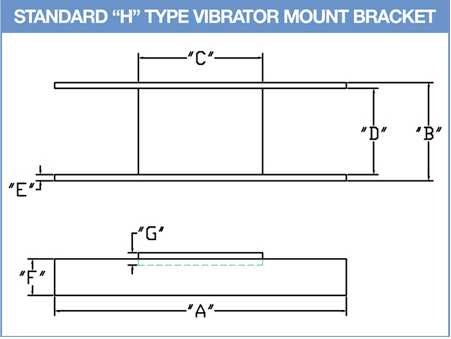
| BRACKET | A | B | C | D | E | F | G |
|---|---|---|---|---|---|---|---|
| MB-6 | 6(152) | 4.25(108) | 6(152) | 3.88(98.4) | 0.19(4.76) | 1.5(38.1) | 0.19(4.76) |
| MB-12 | 12(305) | 5.5(140) | 6(152) | 5(127) | 0.25(6.35) | 1.5(38.1) | 0.25(6.35) |
| MB-18 | 18(457) | 5.5(140) | 6(152) | 5(127) | 0.25(6.35) | 1.5(38.1) | 0.38(9.65) |
| MB-30 | 30(762) | 7.25(184) | 7.5(191) | 6.5(165) | 0.38(9.65) | 1.5(38.1) | 0.38(9.65) |
| MB-36 | 36(914) | 8.75(222) | 11(279) | 8(203) | 0.38(9.65) | 1.5(38.1) | 0.5(12.7) |
| MB-48 | 48(914) | 8.75(222) | 11(279) | 8(203) | 0.38(9.65)) | 1.5(38.1) | 0.5(12.7) |
 30-Day Money-Back Guarantee!
Put the MARTIN® MT-FAST™ Hopper Trailer Vibrator to the test! Use our product for up to 30 days, risk-free. If for any reason you are not completely satisfied, return the product for a full refund.
Simply contact us online or give us a call at 800-474-4538 to speak to a technician about our 30-Day Money-Back Guarantee.